
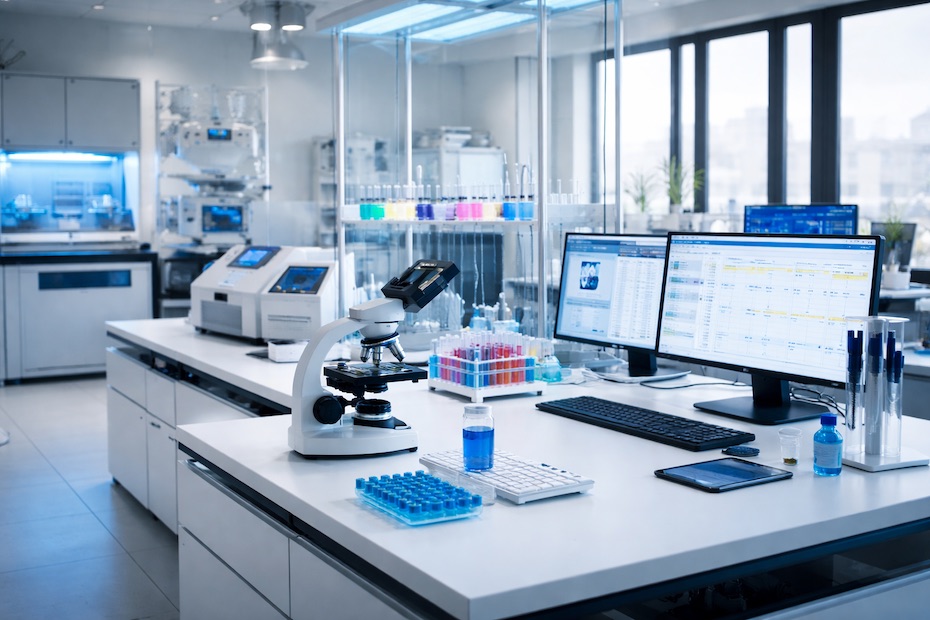
Building a biotech lab requires deliberate planning around equipment, software, and workflows that support reliable experimentation, regulatory readiness, and scalable growth. When designed correctly, a biotech lab becomes a controlled production environment rather than a collection of isolated tools.
This guide explains exactly how you build a biotech lab from the ground up, which equipment matters at each stage, and how modern software systems hold the entire operation together. You will walk away with a clear, execution-ready understanding of what belongs in your lab and why it matters.
What equipment do you need to build a functional biotech lab?
A functional biotech lab starts with core equipment that supports daily biological workflows without introducing unnecessary complexity. You begin with precision pipettes, calibrated balances, centrifuges, microscopes, incubators, refrigerators, freezers, and autoclaves. These tools handle sample preparation, storage, sterilization, and observation, forming the operational backbone of the lab.
You must select equipment based on repeatability rather than novelty. Reliable centrifuges ensure consistent separation of cells and reagents, while incubators maintain controlled temperature and humidity conditions required for cell culture or microbial growth. Microscopes allow verification at every step, reducing wasted time on flawed experiments.
Equipment placement matters as much as selection. Workflow design should minimize cross-contamination and unnecessary movement. A well-organized bench layout improves accuracy, reduces operator fatigue, and speeds up experimental cycles without compromising safety.
How do centrifuges, PCR machines, and electrophoresis systems support molecular workflows?
Molecular biology workflows depend on specialized instruments that move beyond general lab tasks. Centrifuges enable precise separation of biological components, supporting DNA extraction, protein isolation, and cell harvesting. Without dependable centrifugation, downstream analysis becomes inconsistent and difficult to reproduce.
PCR machines provide controlled thermal cycling that amplifies genetic material with precision. This capability supports diagnostics, research validation, and experimental verification. Selecting a PCR system involves evaluating throughput needs, temperature accuracy, and software usability rather than chasing maximum advertised features.
Electrophoresis systems complete the workflow by allowing you to analyze nucleic acids or proteins visually. Gel systems help confirm molecular size, integrity, and purity before results move forward. When these tools work together seamlessly, your lab maintains speed without sacrificing experimental control.
Why are biosafety cabinets and sterilization systems non-negotiable?
Biotech labs handle materials that demand strict environmental control. Biosafety cabinets protect both personnel and samples by maintaining filtered airflow and containment. Selecting the correct cabinet class depends on biological risk level and experimental scope.
Sterilization systems, particularly autoclaves, eliminate microbial contamination across tools and waste streams. Without consistent sterilization protocols, data integrity erodes rapidly. Contamination issues rarely announce themselves early, making prevention far more valuable than correction.
Environmental controls also include proper waste handling, surface decontamination, and airflow management. These systems work together to preserve experimental integrity, protect staff, and support long-term operational credibility.
How should lab furniture and storage be planned for efficiency?
Lab furniture shapes daily execution more than most teams expect. Benches must support chemical resistance, weight loads, and frequent cleaning without degrading over time. Adjustable workstations reduce strain and support long experimental sessions without compromising accuracy.
Storage systems play a direct role in reproducibility. Clearly labeled reagent storage, temperature-controlled units, and organized consumable access reduce handling errors. When materials remain easy to locate and track, experiments move faster with fewer disruptions.
You should design storage around workflow rather than convenience. Frequently accessed materials belong within arm’s reach, while long-term storage remains segregated. This structure protects sample integrity and maintains operational discipline as the lab scales.
What software systems are essential for modern biotech labs?
Physical equipment alone cannot support modern biotech operations. Software systems manage complexity, traceability, and collaboration. Laboratory Information Management Systems (LIMS) track samples, workflows, and metadata across experiments. These platforms ensure traceability and audit readiness as data volumes grow.
Electronic Lab Notebooks replace paper documentation with searchable, timestamped records. ELNs support collaboration across teams while preserving experimental history. They reduce data loss, streamline reviews, and support regulatory documentation when required.
Data analysis software completes the ecosystem. Bioinformatics tools process sequencing results, assay outputs, and statistical comparisons. Without structured software integration, valuable experimental insights remain locked inside fragmented files and personal devices.
How does automation improve lab accuracy and scalability?
Automation removes variability from repetitive tasks. Liquid handling robots perform precise pipetting at scale, reducing human error and freeing skilled staff for higher-value work. Even modest automation improves throughput and data consistency.
Automation also improves reproducibility. Protocols executed by machines follow identical parameters every time, supporting reliable comparisons across experiments. This consistency becomes essential when scaling research programs or preparing results for external validation.
You should implement automation gradually. Identify bottlenecks first, automate tasks with high repetition, and validate results before expanding usage. This measured approach prevents overinvestment while delivering immediate performance gains.
What safety systems must be in place before operations begin?
Safety infrastructure defines whether a biotech lab can operate sustainably. Personal protective equipment, chemical storage cabinets, emergency showers, eyewash stations, and clear signage establish baseline safety standards.
Training programs reinforce these systems. Staff must understand equipment operation, waste handling, and emergency procedures. Clear documentation reduces incidents and builds a culture of accountability without slowing productivity.
Regulatory alignment also depends on safety readiness. Inspections focus on documentation, training records, and maintenance logs. When safety systems integrate naturally into daily operations, compliance becomes routine rather than disruptive.
How do you design a biotech lab for future growth?
A lab built only for current needs limits long-term success. Modular equipment, flexible bench layouts, and scalable software systems allow expansion without full redesign. Growth-ready labs adapt to new assays, technologies, and team sizes with minimal disruption.
Power capacity, ventilation, and data infrastructure should exceed immediate requirements. Retrofitting utilities becomes costly once operations are underway. Planning ahead preserves momentum and protects capital investment.
Future growth also includes collaboration. Shared data platforms, standardized protocols, and clear documentation allow new team members to integrate quickly. This readiness supports partnerships, funding milestones, and accelerated timelines.
What equipment is essential to build a biotech lab?
- Precision pipettes, centrifuges, incubators, microscopes
- PCR and electrophoresis systems for molecular work
- Biosafety cabinets, autoclaves, and sterilization tools
- LIMS and electronic lab notebooks for data control
Build It Right, Scale It Confidently
A biotech lab succeeds when equipment, software, and workflow design operate as a single system. Each decision you make shapes reproducibility, safety, and growth potential. Cutting corners early creates hidden costs later, while disciplined planning compounds efficiency over time. When you invest in reliable tools, structured software, and scalable design, your lab becomes an execution engine rather than a constraint. That foundation supports discovery, collaboration, and long-term credibility across every stage of growth.

Nirdosh Jagota is the Consultant & Managing Partner, GRQ Biotech Advisors. Nirdosh Jagota has over 30 years of experience in biotech and pharmaceutical industries, leading innovation in regulatory affairs and quality management.
Dr. Nirdosh Jagota has led global teams across US, Europe, Asia Pacific, Latin America, China, India, and Japan. His expertise has been instrumental in the successful submission, approval, and lifecycle management of biologics, small molecules, and vaccines.